FELICIA BERGSTRÖM
ANIMATOR AND DIRECTOR
FELICIA BERGSTRÖM
ANIMATOR AND DIRECTOR
 |
 |
 |
 |
 |
 |
 |
 |
 |
 |
 |
|---|
ARCHETYPON VOXEL
MOSAIC and ANIMATION
VIDEO INSTALLATION
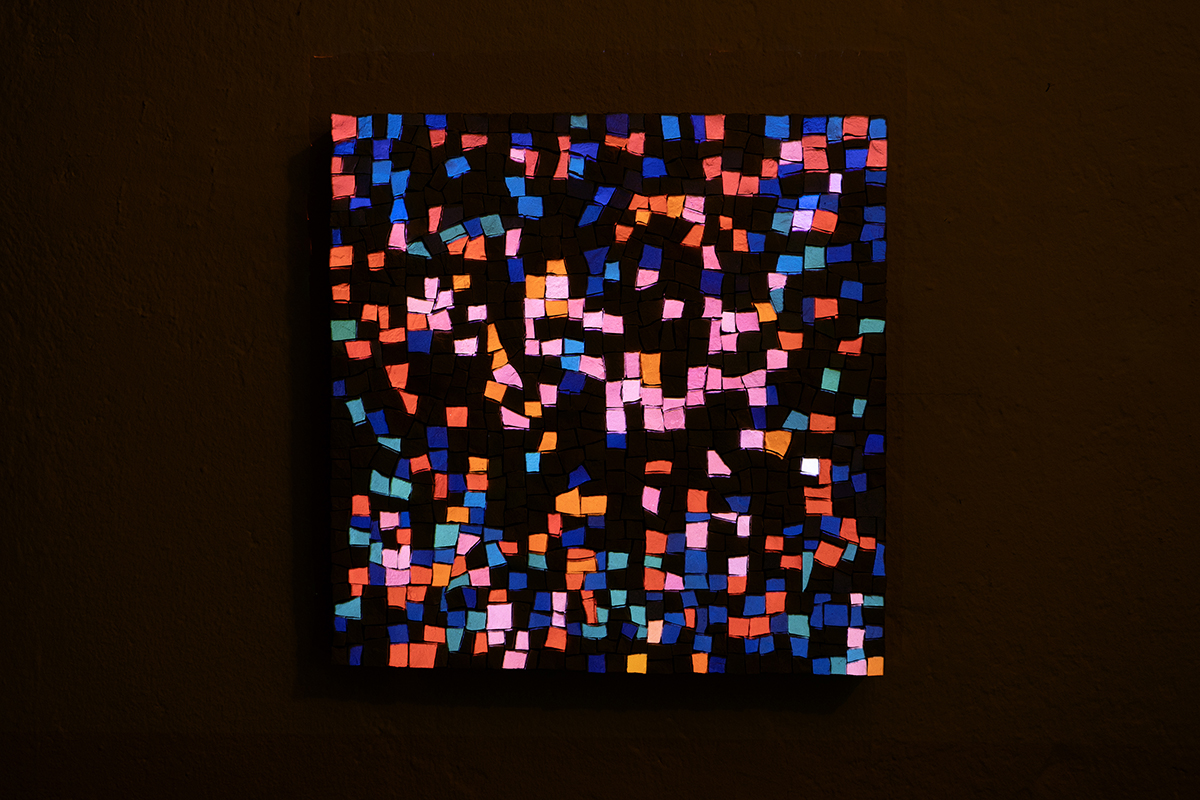
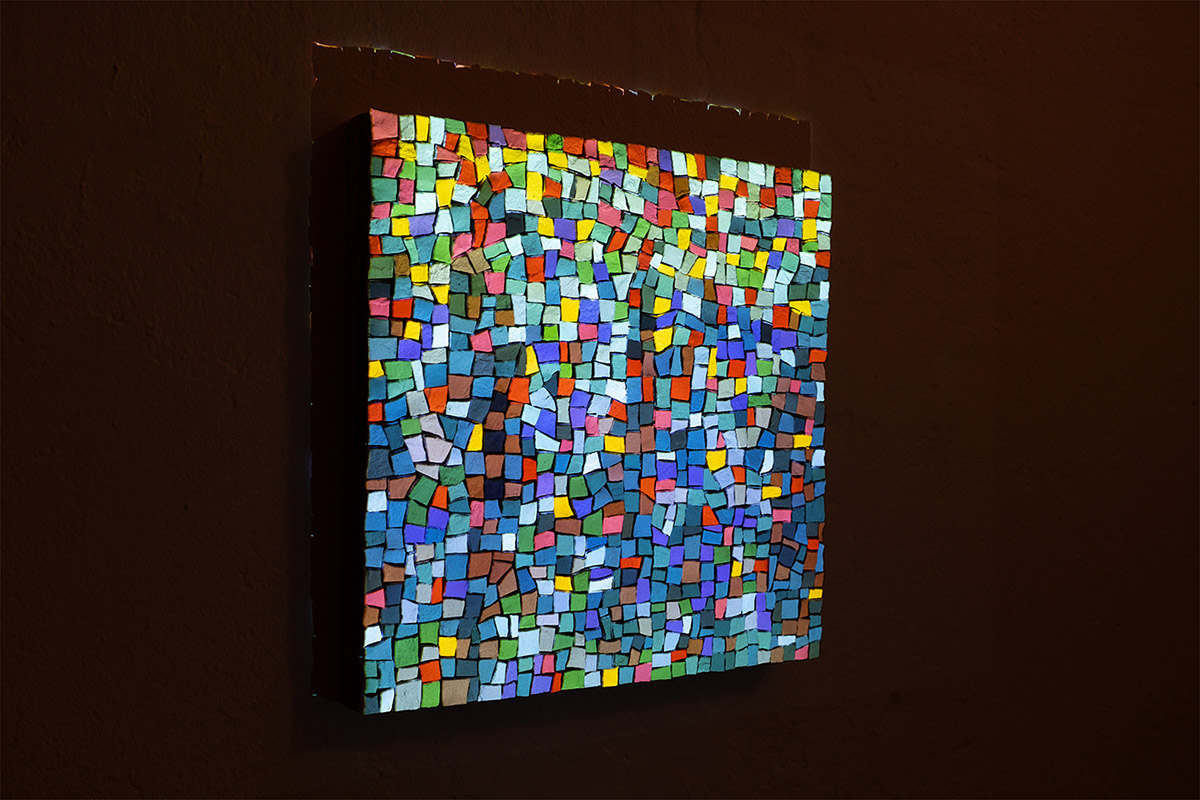
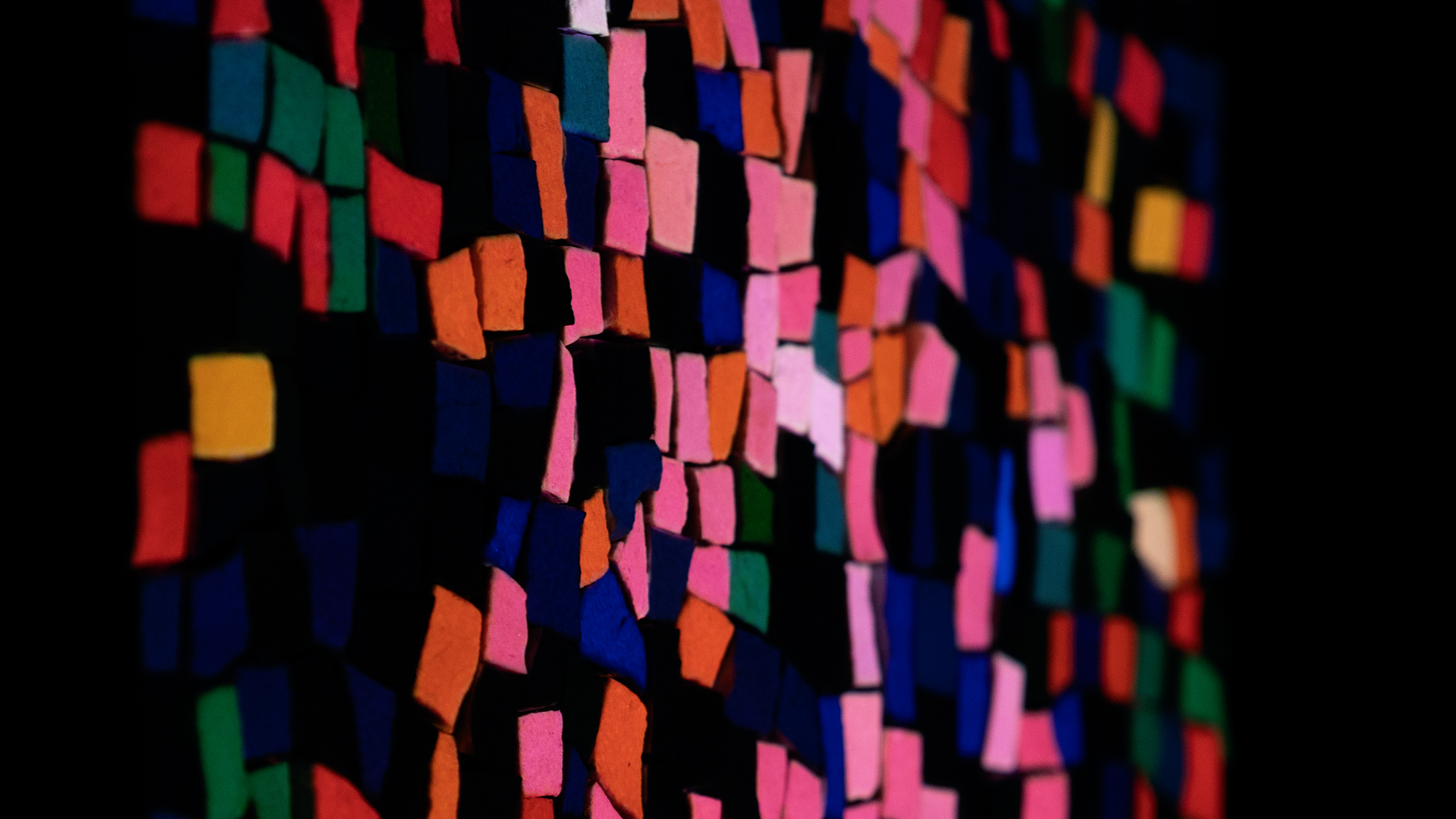
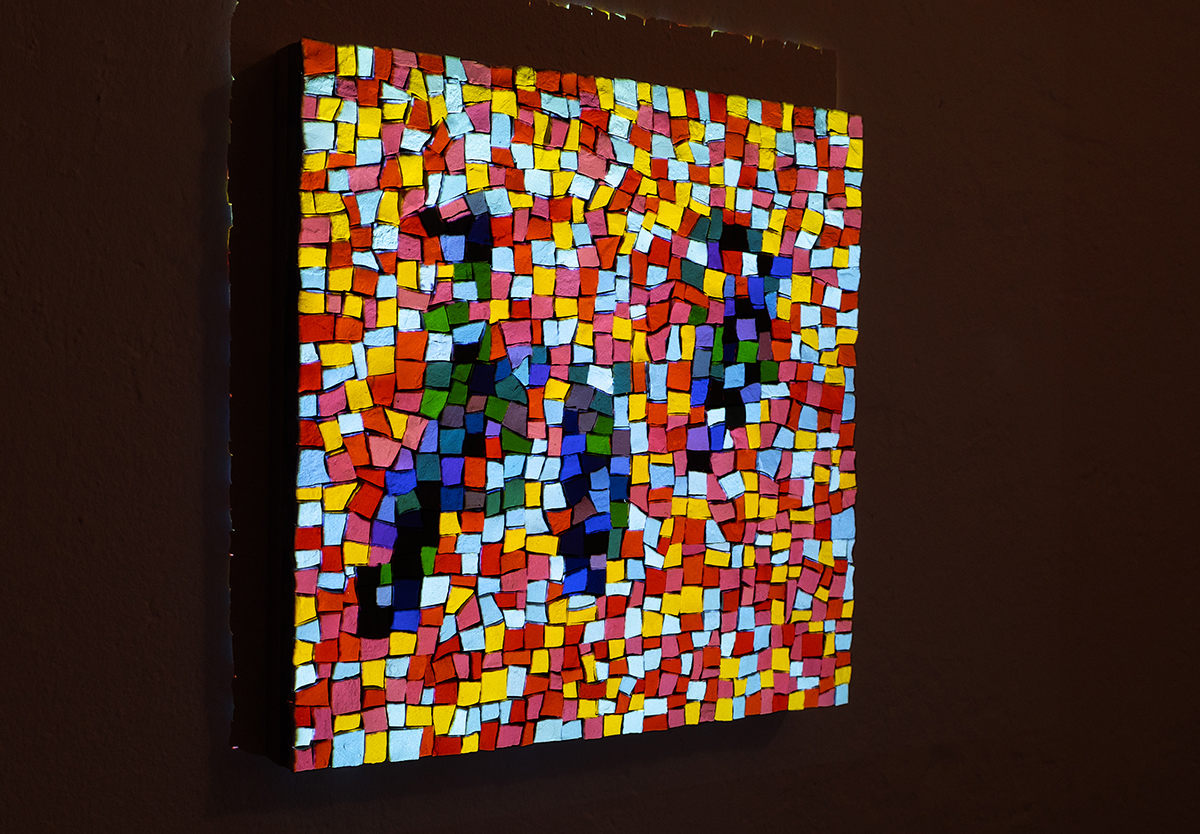
Archetypon Voxel is a work that combines the ancient technique of mosaic with abstract digital animation. Together they interact to construct and deconstruct the mosaic space. The video is projected and mapped onto each stone 'tessera' in the mosaic and together they create a poetry of patterns and fluid forms. The language of mosaic is confronted and excavated by light impulses that reveal the immateriality and de-substantialisation of the mosaic surface.
Since antiquity, human beings have tried to create a feeling of movement in static images like frescoes and mosaics. A mosaic surface is composed by thousands of tesserae, positioned and angled in the direction of light sources in order to capture and reflect it. Using moving light, like flickering candles and the sunlight shining through narrow medieval windows they where able to create illusion of moving images that ignited their imagination. This movement was suggested by simple but effective means on the surface of the multicoloured sparkling stones. Archetyphon Voxel develops this possibility by projecting animations directly onto the surface of the mosaic, mapping it to fit each stone.
A mosaic's underlying structure can be thought of as a grid. The grid can probably also be considered the earliest example of symbolic-abstract depiction made by humans. This is evidenced by the discovery in the Gorham caves of some rock engravings made by the Neanderthals, which, according to scientists, can be considered the first known example of human artistic manifestation. We also find the grid in inventions such as woven textiles and in all modern digital displays where the pixels can be compared to the square tesserae of a mosaic. The electronic pixels are organised conforming to a specific repetitive pattern, while the mosaic uses the grid as its conceptual structure. If we compare pixels to tesserae, we can see that the pixels are all predetermined static, uniform and repetitive whereas each tessera is unique in its shape because of its handmade cut. In ancient mosaics the tesserae are all different, which makes the space become dynamic. In Archetypon Voxel, the tessera retains its organic-formal uniqueness with the result that the space contracts and expands. The main characteristic of the pixel is its two-dimensionality, whereas the voxel is three-dimensional. This makes the voxel more similar to a mosaic tessera, and as a result, voxels prove to be more suitable than pixels to virtually represent a mosaic surface. The electronic-digital medium has made it possible to work on the language of the mosaic, to continuously shatter the space and reconstruct it again, according to a cosmogonic process specific of mosaic art. In this work the material of which the mosaic is made is in constant dialogue with the light particle, allowing fascinating comparisons with the theory of quantum electrodynamics. The theory suggests that light can be transformed into matter, relating to the poetic and conceptual aspects of the work Archetypon Voxel.
Archetypon Voxel was first exhibited at the Group Exhibition 'FAB Dimensional' at the Festival of Animation Berlin, at Silent Green, in September 2025.
Mosaik: Daniele Consorti
Animation: Daniele consorti and Felicia Bergström
Mosaic Material: lime stone, ceramic, concrete, wood.
Video loop: 7 min. and 45 sek.
2025
Daniele Consorti & Felicia Bergström
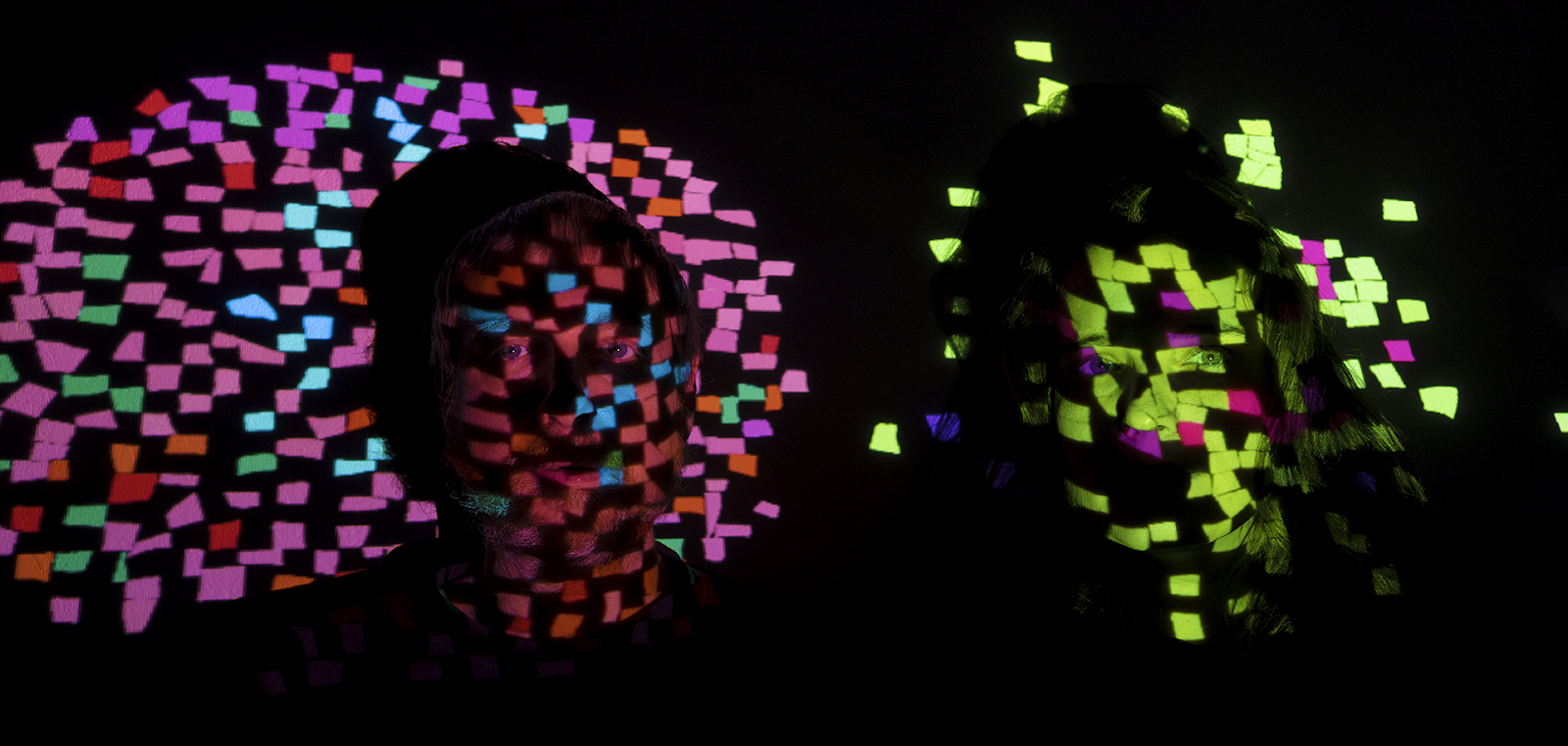
Daniele Consorti and Felicia Bergström are two collaborating artists with different artistic backgrounds. Daniele is an Italian mosaic artist who studied painting at the Academy of Fine Arts in Urbino. Felicia Bergström is a Swedish animator and video artist who studied animation at the Film University Babelsberg. They met in Berlin and began working together on various projects. Inspired by each other's work, they decided to develop a joint project, combining their artistic practices to push the boundaries of their work and expand their language possibilities. In September 2025, they exhibited their collaborative work, 'Archetypon Voxel', for the first time at the 'FAB Dimentional' group exhibition at the Festival of Animation Berlin.